
Pesticide application records, kept straight
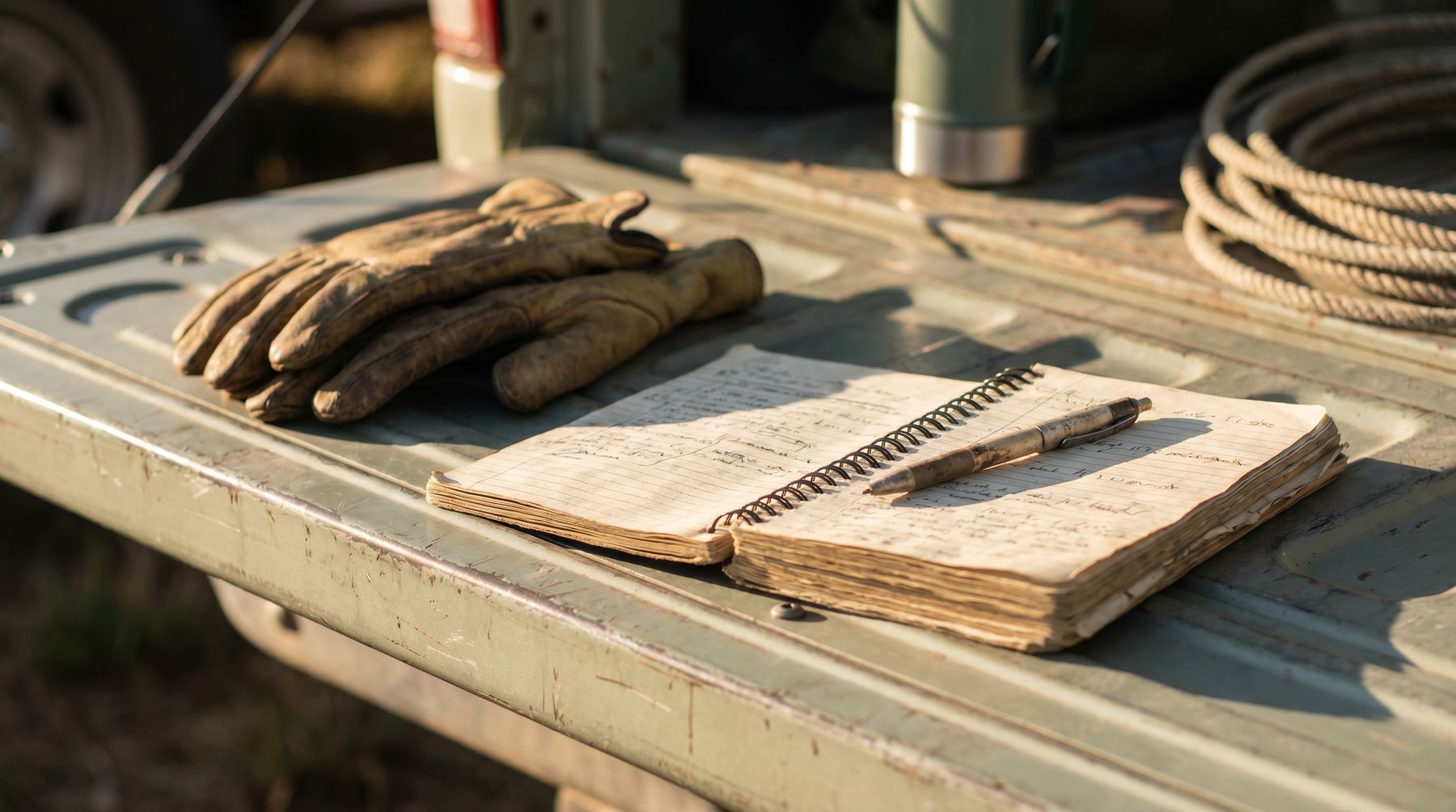
Every licensed applicator knows the two truths of application records: you're required to keep them, and the version scribbled from memory at the end of the week is the version that fails you. The fix isn't more discipline — it's a system where the record is created at the stop, in the same motion as the work.
Capture these fields at every application
Exact requirements depend on your state and license class, but a record that captures the following covers what most frameworks ask for and — more importantly — will reconstruct any visit years later:
- Product name and EPA registration number
- Amount applied (and concentration or rate where applicable)
- Where it was applied — site, area, or target location on the property
- Date and time of application
- Who applied it (applicator name and license, when required)
- Target pest and application method
Your state may require more — and restricted-use products carry their own federal record rules. Verify against the official sources below.
The system: record while the tank is out
- One home, not three — A record split across a clipboard, a photo roll, and a spreadsheet isn't a record — it's a scavenger hunt. Pick one place everything lands.
- At the stop, not after — The only reliable time to record an application is while it's happening. Anything later is reconstruction.
- Attached to the visit — Records that live inside the service visit — with the photos, the report, the signature — answer questions as a set. That's what an auditor, a customer, or your own memory actually needs.
- Retrievable in seconds — The test of a record system isn't storage, it's retrieval: "what did we apply at this property in March?" should be a search, not an afternoon.
Where the official rules live
- Federal (restricted-use products): USDA's pesticide recordkeeping program
- Your state's department of agriculture or structural pest board sets commercial record requirements — search "[your state] pesticide application record requirements".
- The product label governs every application — when the label and convenience disagree, the label wins.
Where Pest Route fits
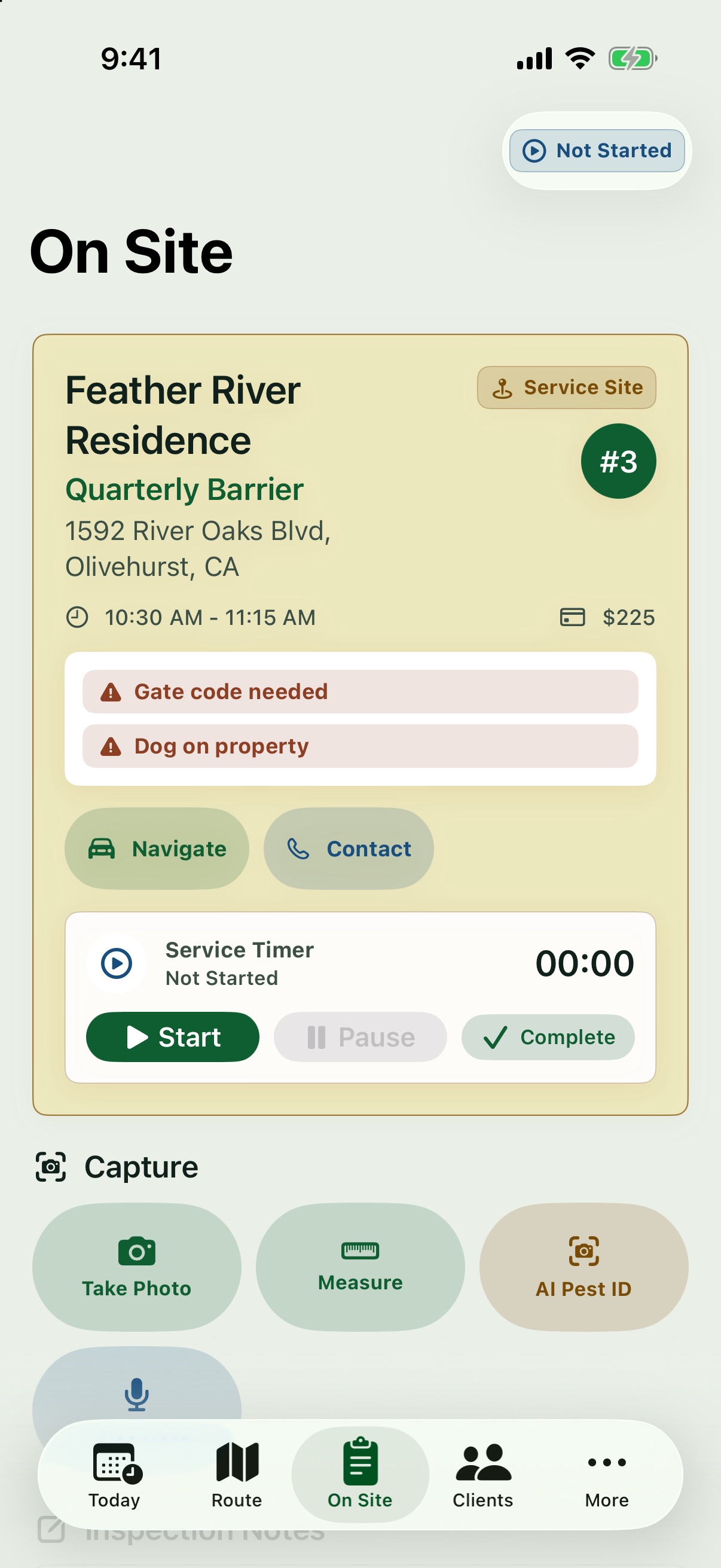
Pest Route's On Site screen puts the materials-and-chemicals log inside the service stop itself — captured with the photos, the timer, and the signature, stored with the visit, searchable later. It records exactly what you enter and what verified product lookups return; the compliance judgment stays where the license is — with you.
Want application records captured in the same motion as the work?
Join the launch listFAQ
Is paper still acceptable?
Generally yes — most frameworks care that records are complete, timely, and retrievable, not what they're written on. Paper's weakness isn't legality; it's retrieval, backup, and the gap between the truck and the filing cabinet.
How long do application records need to be kept?
It varies by state and license class, and federally-covered restricted-use records carry their own retention period — USDA's program (linked above) states the federal rule. The safe operating posture: check your state's current requirement, and let digital storage make long retention free.
What's the most common record-keeping failure?
Timing. Records reconstructed at week's end drift — amounts get rounded, sites get generalized, one stop blurs into another. A shorter record made during the application beats a longer one made from memory.