

Getting paid in the field — not at the kitchen table
The most expensive room in a solo operation is the kitchen after dark — where the day's invoices get written, the follow-ups get postponed, and the money waits. Field payment flips the sequence: the visit produces the invoice, the invoice arrives while you're still trusted and top-of-mind, and the payment happens at the door or minutes after.
Invoice at the completion, not the month-end
The invoice's best moment is the one where the customer just watched the work happen. Batch-invoicing at month-end feels efficient but quietly costs twice: hours of reconstruction, and payment cycles that start weeks after the value was delivered. The operating rule: no truck leaves a completed stop without the invoice existing.
Payment links: the smallest upgrade with the biggest effect
A payment link is just a secure URL the customer opens to pay by card — texted or emailed with the report. No card reader, no cash handling, no "I'll mail a check." For recurring residential work it compounds: the customer who paid in one tap last quarter pays in one tap this quarter.
Keep the money tied to the visit
A payment recorded in one app and a service recorded in another will eventually disagree, and you'll spend an evening finding out why. The durable pattern: visit → report → invoice → payment as one chain, so every dollar answers to a specific stop. That's also what makes tax season a report instead of an archaeology dig.
Where Pest Route fits
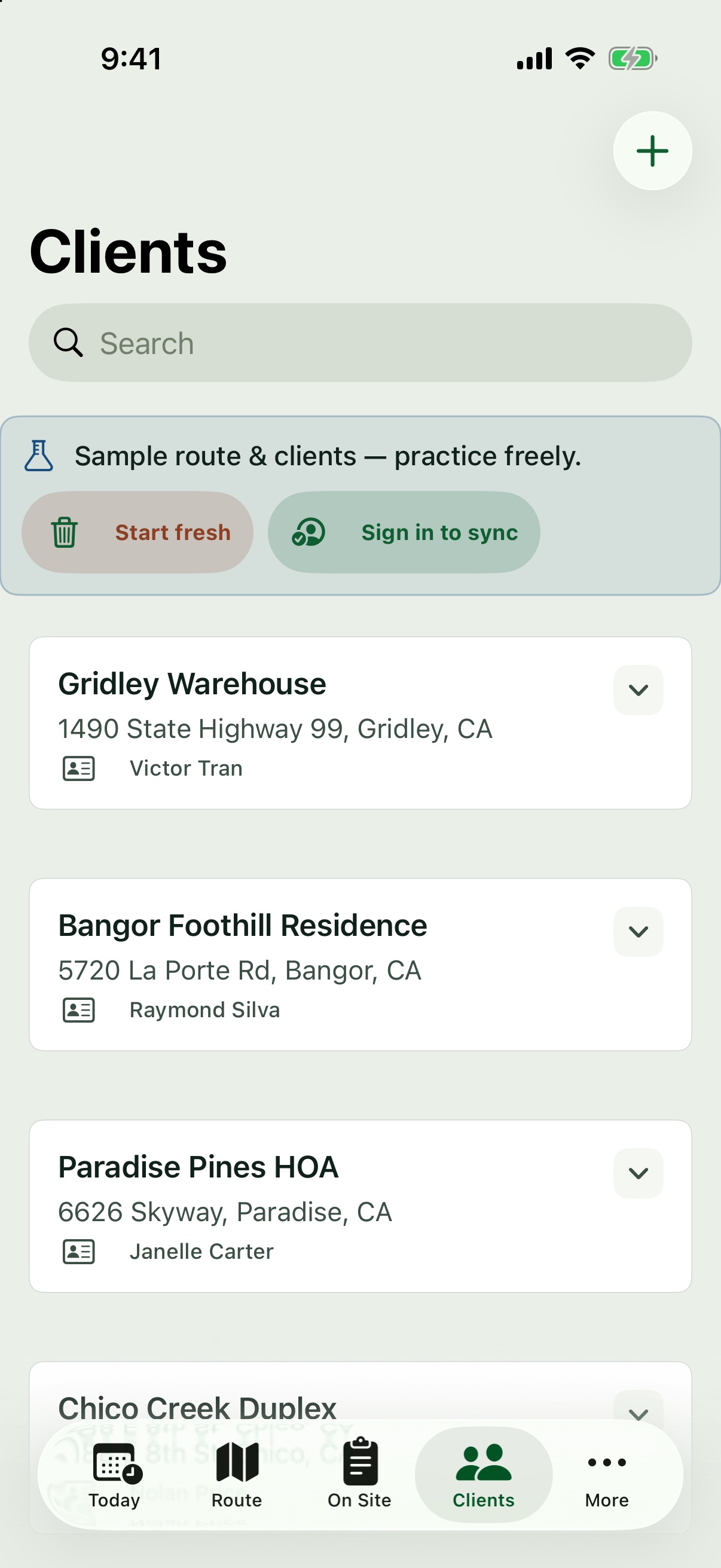
This chain is built into Pest Route's design: the completed stop produces the report, the report carries the billing, and payment links run on Stripe's rails — the app never holds your funds. Payments are part of the current pilot work, and founding-pilot operators will be the first to run their real books on it.
Want the visit-to-payment chain in one app?
Join the launch listFAQ
Are card fees worth it for a small operation?
Weigh the fee against what a check actually costs: the follow-up calls, the second visit, the deposit run, and the receivable sitting open for weeks. For most recurring-service operators, faster certain money beats slightly larger slow money — but it's your margin math to run.
Should I take deposits on bigger jobs?
Common practice for exclusions and larger one-time work: a deposit to schedule, balance on completion. It filters unserious buyers and funds the materials — put the terms on the quote so it's policy, not negotiation.
Does Pest Route sync with QuickBooks?
Not in the pilot — accounting sync is a post-pilot decision, behind the core field loop. The pilot priority is making the visit-to-payment chain airtight so whatever accounting you use receives clean, complete data.