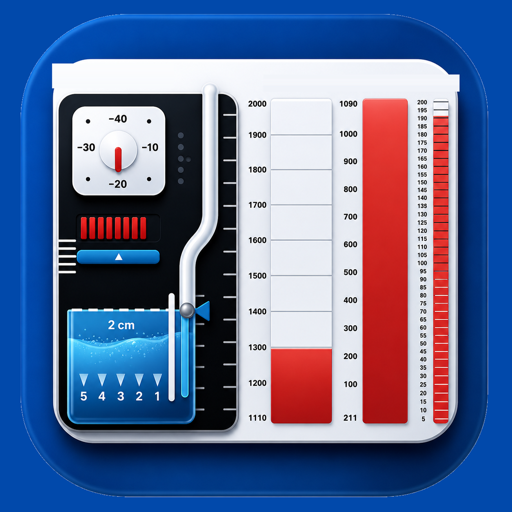
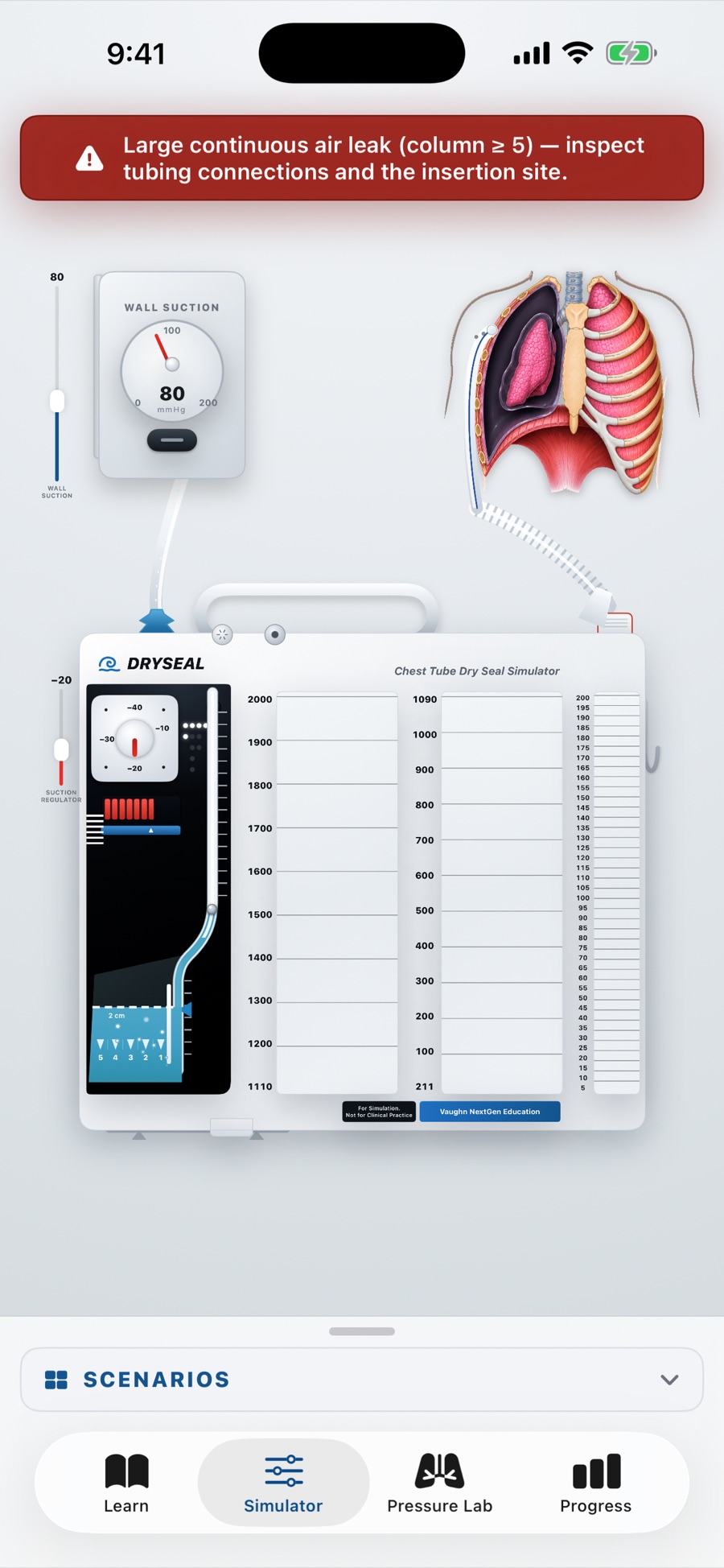
The three chambers
Most drainage units are built around three connected chambers, and every one you'll meet is a version of this:
- Collection chamber — closest to the patient; collects blood and fluid from the pleural space and is graduated so you can measure and record output. You document the amount and how it looks (typically each shift, per your facility's policy), and mark the level so the next nurse can see the trend.
- Water-seal chamber — a small column of water (kept at the 2 cm mark) that acts as a one-way valve: it lets air leave the chest and won't let it back in. This is where you watch for tidaling and for an air leak.
- Suction-control chamber (or dial) — limits how much suction reaches the pleural space. Older "wet" units set this with a water column; modern dry-suction units use a mechanical dial. More on this below.
Dry suction vs the classic water column
The unit in Chest Tube Simulator is a dry-suction system with a water seal — the common modern setup. "Dry suction" means the amount of suction is set by a regulator dial, not by the height of water in a suction chamber. It still has a water-seal chamber for the one-way valve, tidaling, and air-leak detection. So you get a dial for suction and a water column for reading the seal.
Reading it, top to bottom
- 1 — Drainage. How much is in the collection chamber, and what does it look like? Note the amount, the color, and the rate of change. A sudden jump in bright-red output is a cue to escalate.
- 2 — The water seal (tidaling). Does the water level swing up and down a little with each breath? That swing is tidaling, and it usually means the tube is open and doing its job. If it stops, something has changed. → Full guide: What is tidaling?
- 3 — The air-leak chamber (bubbling). Is anything bubbling through the water seal? A little bubbling that comes and goes with breaths can be expected; steady, continuous bubbling points to an air leak. → Full guide: Air leaks & bubbling
- 4 — Suction. What's the order (often −20 cmH₂O), and is the device actually delivering it? The number on the wall isn't the suction the patient is getting. → Full guide: Suction settings
What "normal enough" looks like
A settled system often shows steady or decreasing drainage, gentle tidaling in the water seal, little or no continuous bubbling, the unit upright and below the level of the chest, and the suction reading where it was ordered. "Normal" always depends on the patient and the order — this is orientation, not a substitute for your facility's assessment.
See it move — and practice
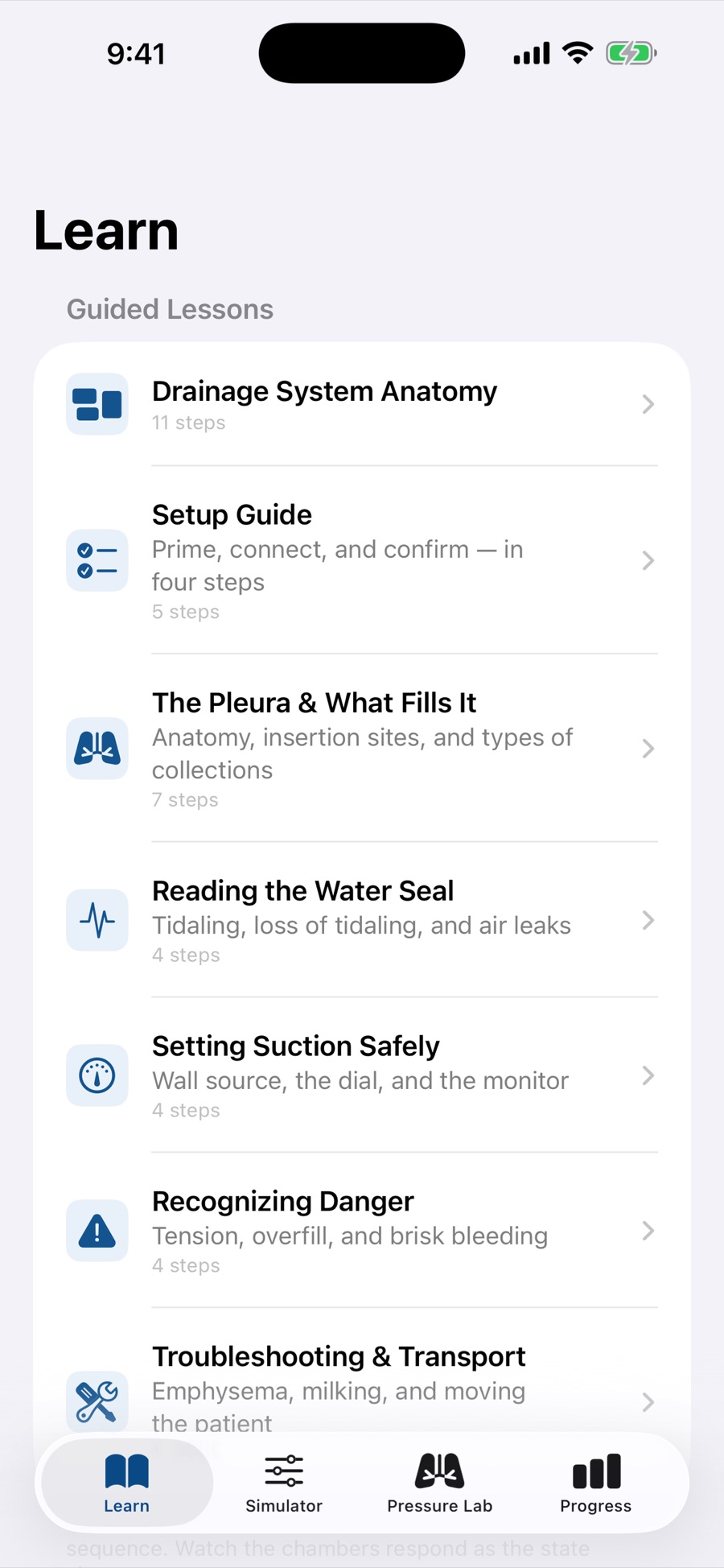
Reading a drain clicks when you can watch it respond. In Chest Tube Simulator you operate the real device: change the condition and see the chambers answer, then step through the guided lessons from anatomy to danger recognition.
 $49.99 · one-time purchase · iPhone & iPad
FAQ
-
What are the three chambers of a chest drainage system?
Collection (measures drainage), water seal (a one-way valve where you see tidaling and air leaks), and suction control (a water column or, on dry-suction units, a dial).
-
Why is the unit kept below the chest?
So gravity helps drainage and fluid can't flow back toward the patient. Keep it upright, too.
-
Is Chest Tube Simulator a real drainage unit?
No — it's an interactive simulation for learning. It's not a medical device and isn't used for patient care.