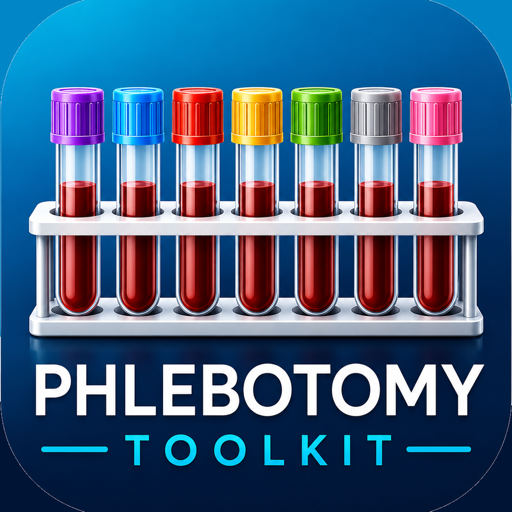
The order, color by color
From first to last, the standard order is:
- Blood cultures — sterile bottles come first so the site is freshly prepped and nothing else contaminates them.
- Light blue — sodium citrate — coagulation tests (PT/INR, aPTT). Must be filled to the line.
- Serum — red (no additive) or gold/SST (clot activator + gel) — most chemistry and serology.
- Green — heparin — plasma chemistry and stat chemistries.
- Lavender — EDTA — CBC and most hematology.
- Gray — sodium fluoride / potassium oxalate — glucose and lactate.
Some facilities also place royal-blue (trace metals), tan, yellow, or pink tubes at specific points. Your lab's test directory is the final word.
Why the order matters — additive carryover
When the needle passes through a tube's rubber stopper, a microscopic amount of that tube's additive can cling to it and carry into the next tube. Draw a heparin tube before a light-blue coagulation tube and that carried-over heparin can skew the coagulation result — a classic cause of a redraw. The order is built to move from "no additive" toward additives that would most disrupt the next test.
A mnemonic (but understand it, don't just memorize it)
A common one is "Young Bodies Really Should Get Large Grains" — Yellow (culture), Blue, Red, SST/gold, Green, Lavender, Gray. Mnemonics are great for exam day, but the phlebotomists who never mix up a tricky order are the ones who understand carryover and know which additive belongs to each tube.
Special cases & facility policy
The order can shift for winged (butterfly) sets, discard/waste tubes, special microbiology, and some send-outs, and a few facilities publish their own order. Follow your employer's approved policy and your laboratory's test directory whenever local practice differs from a general chart.
Practice it in the app
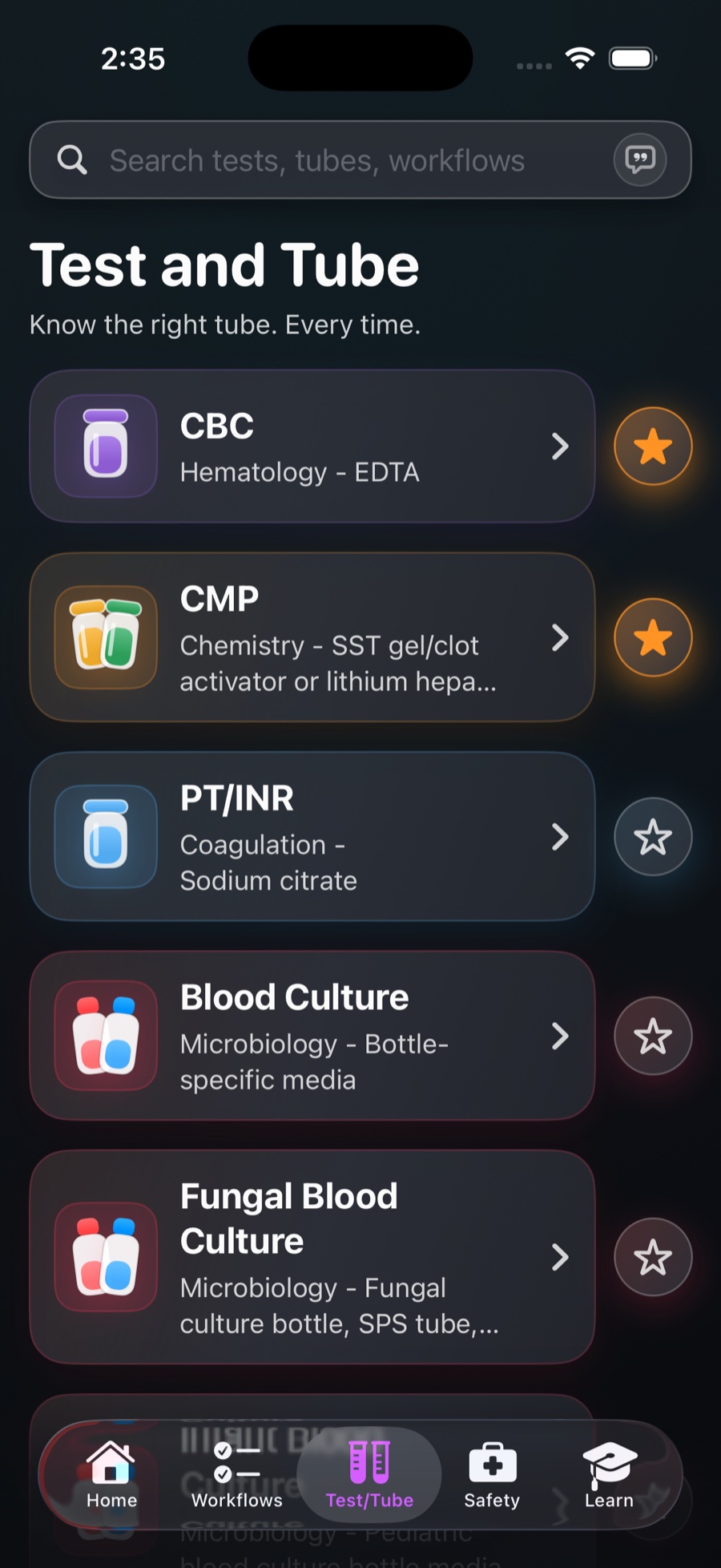
Phlebotomy Toolkit shows the order of draw with color-coded tubes and links each tube to its tests, additive, and handling — so the sequence sticks. It's offline, so it's there at the draw chair or on the bus to your exam.

$9.99 · one-time · no subscription · iPhone & iPad