Find the vein
- Warmth. A warm pack for a few minutes dilates veins that cold has shrunk.
- Hydration & gravity. If it's appropriate for the patient, water helps; lowering the arm below the level of the heart increases filling.
- Tourniquet, done right. Place it 3–4 inches above the site and leave it on for no more than about a minute — long enough to find a vein, not so long that it changes the sample.
- Palpate, don't just look. A bouncy, palpable vein beats a visible one; ask the patient where draws have worked before.
Rolling, fragile, and collapsed veins
- Rolling: anchor the vein firmly with your thumb below the site and enter at a shallow angle so it can't slide away.
- Small or fragile: a smaller butterfly (winged) set gives more control and gentler flow.
- Collapsed / no flow: release and re-apply the tourniquet, check depth and angle, and don't probe or redirect blindly — blind redirection risks nerve injury.
When to stop and escalate
Two unsuccessful attempts is a common limit before handing off to another collector — but the number, and when to escalate, is set by your facility. Stop for severe pain, numbness or tingling (possible nerve involvement), or a rapidly forming hematoma, and follow your facility's policy for what comes next.
Practice in the app
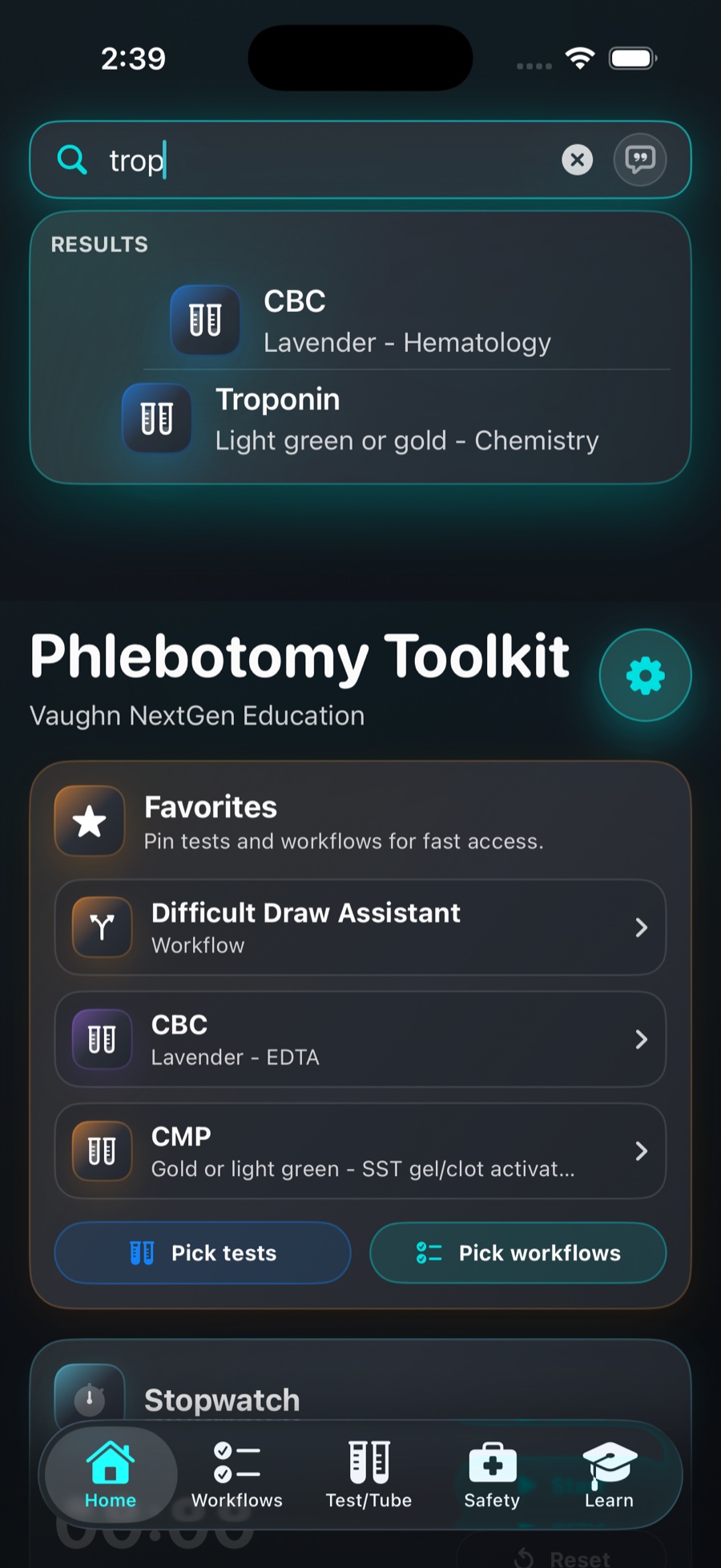
Phlebotomy Toolkit's Difficult Draw Assistant walks the common problems — no flow, rolling, collapsed, and fragile veins, hematoma concerns, and when to stop — with calm, step-by-step guidance you can pull up mid-shift.

$9.99 · one-time · no subscription · iPhone & iPad